
The practical recipe
Authentic Dosa Batter Recipe
Learn how to make authentic South Indian dosa batter using just rice, urad dal and fenugreek. This simple recipe creates a naturally fermented batter perfect for crispy dosas, masala dosas and uttapam.
- Family recipe
- Vegetarian
- Vegan
- Step-by-step recipe
🎓 New to making dosa?
If this is your first time making dosa batter, I recommend reading our Mumbai Mix Master Guide to Perfect Dosa Batter before starting.
The guide explains:
- • Choosing the right rice
- • Choosing the right dal
- • Fermentation
- • UK kitchen advice
- • Common mistakes
Before You Start
This is rated advanced difficulty, and involves 20 min, 4–6 hrs (summer) / overnight, 6–8 hrs (winter), 6–12 hrs (summer) / up to 48 hrs (winter), 3 min. None of it is complicated — just a little patience where the recipe needs it.
What you'll learn
- • How to soak and grind rice and urad dal into a smooth batter
- • Why fermentation time changes with the seasons, and how to judge it in a UK kitchen
- • How to pour and spread a thin, even dosa
- • How to judge pan temperature so the base turns golden, not pale or burnt
Step-by-step
- 1
Soak the rice and dal
Soak the rice and urad dal separately. During warmer months soak for 4–6 hours; during colder months, soak overnight. Add the fenugreek seeds to the rice while soaking.
[PHOTO – Ingredients][PHOTO – Soaking rice] - 2
Blend to a smooth batter
Drain the grains, keeping the soaking water. Blend the rice and urad dal separately until smooth, adding enough soaking water to create a batter with the consistency of whipped cream.
[PHOTO – Grinding batter][PHOTO – Batter Consistency] - 3
Combine and ferment
Combine both batters in a large bowl and mix thoroughly by hand. Cover loosely and leave to ferment until light, airy and slightly tangy — in summer this usually takes 6–12 hours; in winter it may take up to 48 hours.
[PHOTO – Fermented Batter] - 4
Heat the tawa
Once fermented, gently stir the batter. Heat a lightly oiled tawa or flat griddle over a medium heat.
- 5
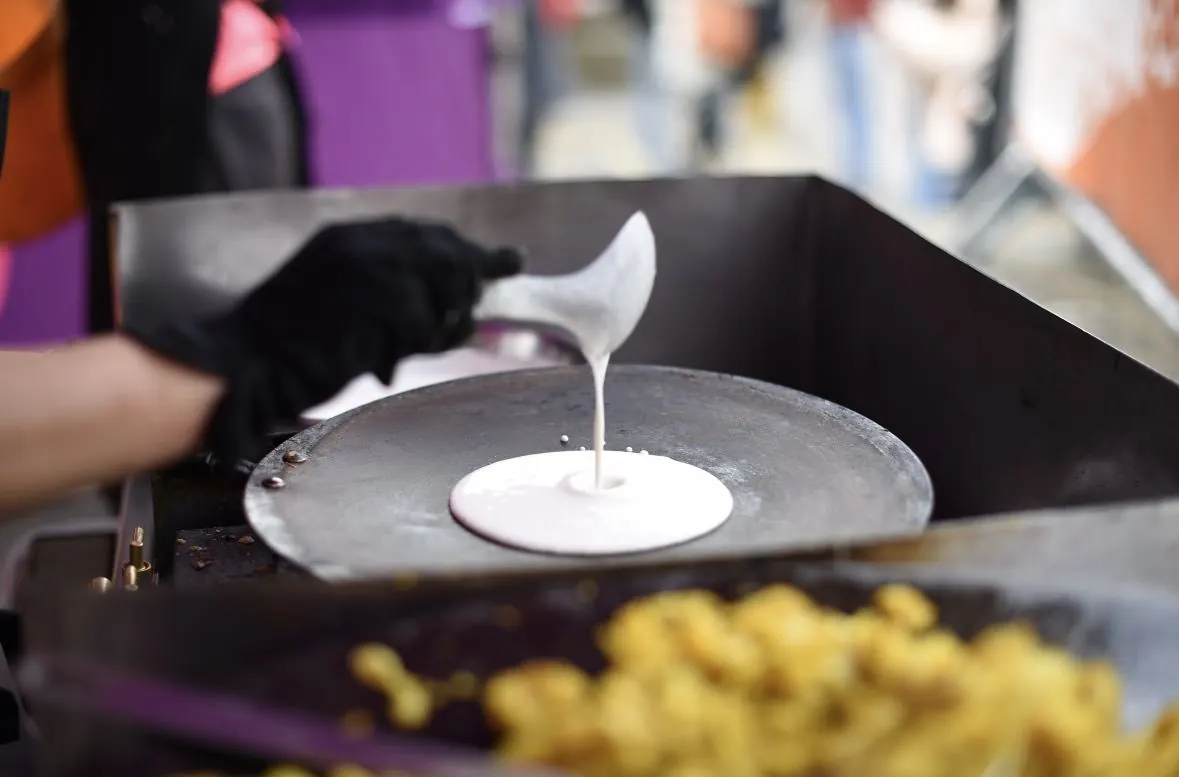
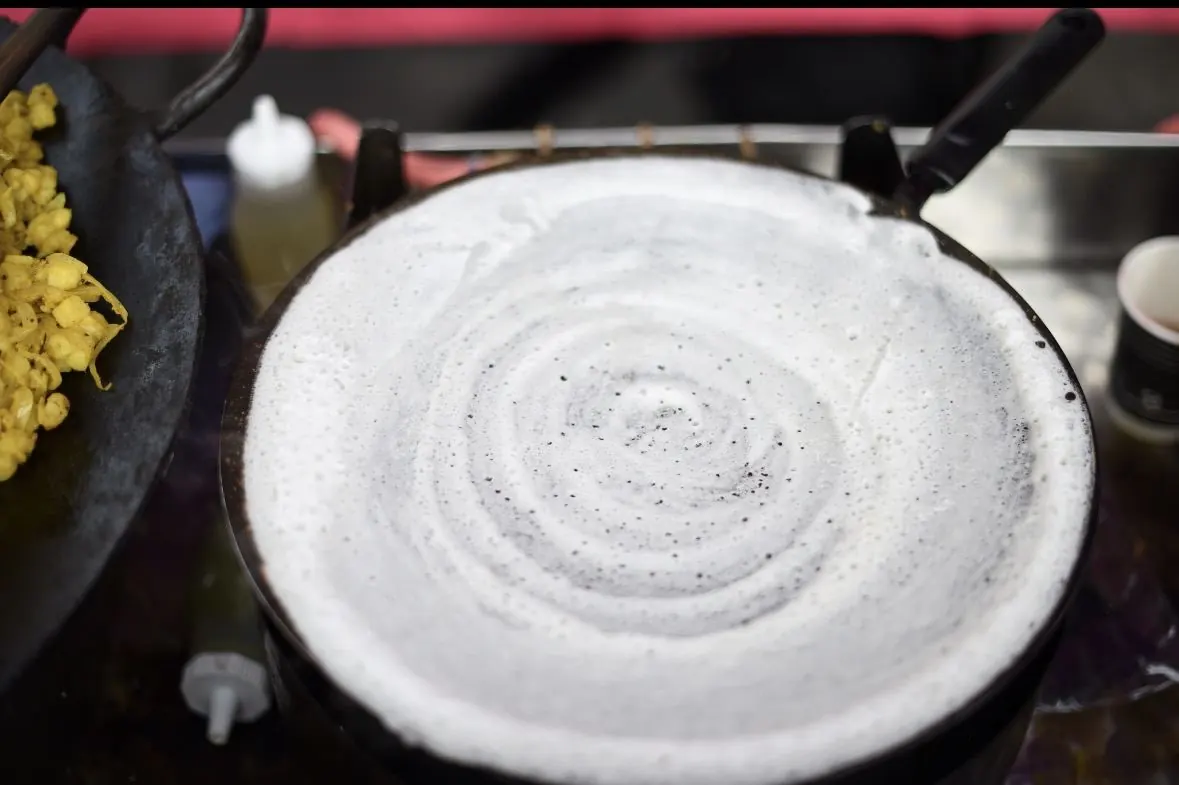
Pour and spread
Pour one ladle of batter into the centre of the pan. Using the back of the ladle, spread the batter in circular motions until thin and even.
[PHOTO – Pouring Batter][PHOTO – Spreading Dosa] - 6
Cook until golden
Increase the heat slightly and drizzle a little oil around the edges. Cook until the edges naturally lift and the underside becomes golden brown.
- 7
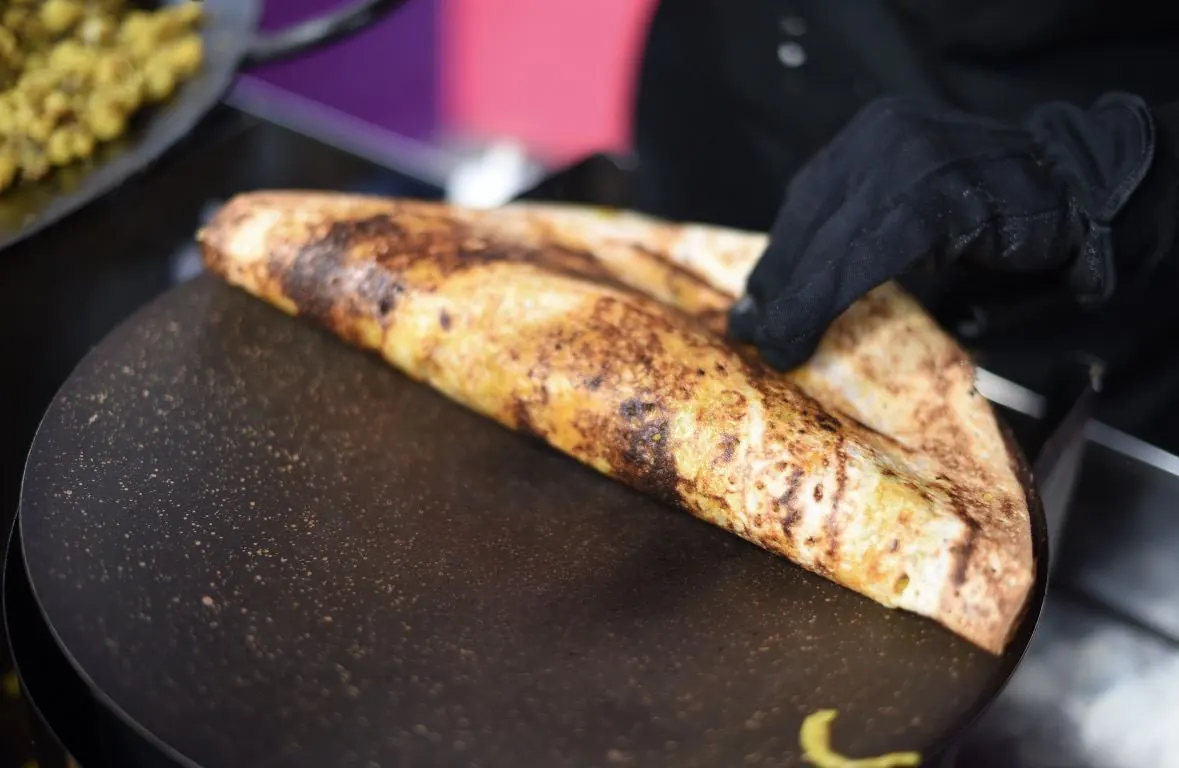
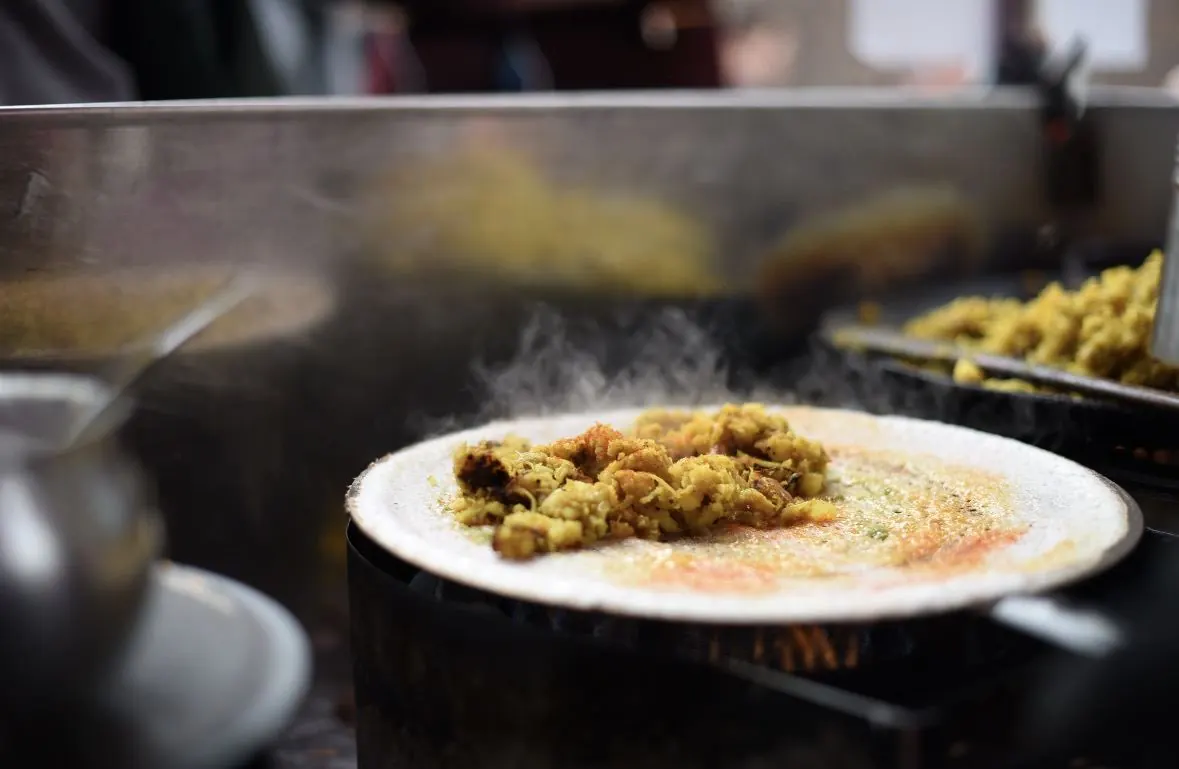
Fold and serve
Fold, roll or fill as desired, and serve immediately. Wipe the tawa with a damp cloth before cooking the next dosa.
[PHOTO – Finished Plain Dosa]
Ready to start cooking? Here's the complete recipe, with everything you need in one place.
Recipe Card
Authentic Dosa Batter Recipe
Ingredients
Tap an ingredient as you go
For the batter
You'll need
- ✓ Large bowl
- ✓ High-speed blender or wet grinder
- ✓ Large mixing bowl
- ✓ Flat tawa or non-stick frying pan
- ✓ Ladle
- ✓ Flat spatula
Method
- 1. Soak the rice and urad dal separately. During warmer months soak for 4–6 hours; during colder months, soak overnight. Add the fenugreek seeds to the rice while soaking.
- 2. Drain the grains, keeping the soaking water. Blend the rice and urad dal separately until smooth, adding enough soaking water to create a batter with the consistency of whipped cream.
- 3. Combine both batters in a large bowl and mix thoroughly by hand. Cover loosely and leave to ferment until light, airy and slightly tangy — in summer this usually takes 6–12 hours; in winter it may take up to 48 hours.
- 4. Once fermented, gently stir the batter. Heat a lightly oiled tawa or flat griddle over a medium heat.
- 5. Pour one ladle of batter into the centre of the pan. Using the back of the ladle, spread the batter in circular motions until thin and even.
- 6. Increase the heat slightly and drizzle a little oil around the edges. Cook until the edges naturally lift and the underside becomes golden brown.
- 7. Fold, roll or fill as desired, and serve immediately. Wipe the tawa with a damp cloth before cooking the next dosa.
Behind the Scenes
💛 Mumbai Mix Tips
- • The first dosa is often your test dosa. It helps you judge the pan temperature and batter consistency.
- • If your batter hasn't risen much but has bubbles and smells pleasantly tangy, it has usually fermented successfully.
- • Every pan behaves differently. Don't be afraid to adjust the heat slightly between dosas.
Common Dosa Batter Mistakes
My batter hasn't risen much — has it actually fermented?
In the situation where the batter has not risen after 24 to 48 hours but has developed a tangy flavour and the batter appears airy with bubbles at the top, this still indicates a successful fermentation process.
My dosa won't spread properly or sticks to the pan
Cooking on medium heat enables the pan to reach a temperature that allows the batter to be spread uniformly and the dosa to cook evenly across its entire surface. If the pan is too hot, the batter will not spread evenly and instead form clumps and gaps. If the pan is too cold, the batter will stick to the pan and won't spread easily.
Ingredient Guide
Why each ingredient earns its place
- Why idli rice?
- Parboiled short-grain rice like Idli rice ferments faster and more reliably than basmati or other long-grain rice, giving a fluffier dosa with a proper tang.
- Why urad dal?
- Urad dal (black gram) is what gives dosa batter its rise and structure. Skinned whole urad dal tends to give the most consistent, well-fermented results.
- Why fenugreek?
- Optional, but genuinely useful — fenugreek seeds add to the batter's tanginess and help the urad dal ferment.
- Why fermentation?
- Fermentation is what turns this batter from a simple rice-and-lentil mix into something genuinely different — it's driven by natural bacteria and yeast, and it's the single biggest reason UK kitchens need different timings and a warmer spot than a kitchen in South India.
FAQs
Does the type of rice actually matter?
Experiments have shown that while different types of rice may not significantly alter texture, parboiled rice ferments more quickly. For the best results, use Idli rice, a parboiled short-grain variety, as it ferments well and produces the ideal texture and flavour for dosas.
Should I use whole or split urad dal?
There is some debate over whether to use the whole unskinned bean or the washed and split variety. To simplify the process, using washed urad dal, either split or whole, is recommended — whole dal just requires a longer soak, similar to the rice.
Do I need to add salt to the batter?
We find it unnecessary due to the natural tanginess imparted by fermentation. However, this is a matter of personal preference and can be added during the grinding phase if desired.
What's the ideal ratio of rice to dal?
Ratios of 3:1 or 4:1 (rice to dal) are most common. Increasing the rice makes the dosa crispier, while the dal acts as a binding agent, giving the dosa coherence and elasticity. For a dosa that is crisp yet flexible enough to wrap around a filling, a 3:1 rice-to-dal ratio is a good starting point.
My batter didn't rise at all overnight, what went wrong?
The most common cause is a kitchen that's too cold — fermentation slows dramatically below around 20°C. Old or low-quality urad dal, or batter ground too thin, can also fail to rise. If it hasn't moved after 12 hours, move it somewhere warmer (an oven with just the light on works well) rather than starting again.
Can I speed up fermentation in winter?
Yes — the two most reliable methods are leaving the batter in an oven with only the interior light on, or on top of the fridge where the motor generates gentle warmth. Avoid direct heat sources, which can kill the fermentation rather than encourage it.
Read the full fermentation guide →Why does my dosa stick to the pan instead of lifting cleanly?
Usually the pan wasn't hot enough before the batter went on, or it wasn't seasoned well beforehand. A properly heated tawa with a thin layer of oil, wiped almost dry with a cloth, should release a dosa cleanly once the underside is golden.
Continue Learning
Now that your batter is ready, learn how to turn it into an authentic South Indian meal.
- The Mumbai Mix Guide to Perfect Dosa Batter
- Authentic Masala Dosa
- Potato Masala
- Tomato Chutney
- Coconut Chutney
From the Mumbai Mix Kitchen
One of the questions I'm asked most often during classes is why the first dosa never looks as good as the second.
The answer is simple. The first dosa tells you everything. It lets you judge whether the pan is hot enough and whether the batter needs adjusting.
Don't chase perfection. Use that first dosa to understand your batter, and the rest become much easier.
— Deshna